Dear Family and Friends,
Just wanted to give you a quick update on the situation here in Lilongwe, Malawi. There were demonstrations and some violence and looting here in Lilongwe, but matters were worse in Mzuzu (northern region) and Blantyre (southern region) than they were here. Things were quiet once dark fell on Lilongwe. I am the campus radio liaison with the US Embassy and I was in radio communication with them throughout the day and we had extra security posted at each gate and round the walls for about 36 hours. There was no danger or trouble where we are. The campus was safe and secure all day and night. I am writing on Thursday morning and I believe that things have quieted that people can go to work and be out their business here in Lilongwe anyway.
As great as are economic and political needs are in Lilongwe the spiritual needs are far greater! I am sure that is the same for back home. Please pray for the work of the Gospel here in Malawi. We are praying for the States.
P.S. It has come to my attention that some foreign media outlets are trying to spin the events here as some sort of ground swell for "homosexual rights" or xenophobia (anti-foreigners). This is could not be further from the truth. There are significant and systemic issues here at all levels of society and that is what people are trying to bring attention to.
Grace and Peace,
Brian and Scharlie
Thursday, July 21, 2011


Wednesday, May 25, 2011
Talking with Samuel Shaba
Last Friday afternoon, while I was working on lesson plans, Samuel Shaba came into my office to sit down and drink some coffee with me. Samuel is a first year student at African Bible College. We met sometime in August or September and have had many brief conversations around campus. Right before the Easter Break he told me about going up to his home village with Dr. Larry Brown--one of the professors at the college--and two other students to show the Jesus movie and preach on Good Friday, Saturday and Easter. I told him that I would be praying for the time and would like to hear how it went.
Well, we finally had the chance to talk. They were able to show the Jesus film and preach numerous times and he said that the people were hungry. Mzimba is the area Samuel grew up in. He has been wanting to go back to his village and preach for awhile. He says that there is such a need to have Gospel preaching in his area. There are churches, but there is not much sound teaching/preaching in the churches. On Easter morning he had the opportunity to preach to over 1,000 people without any amplification.
It was great to hear his passion and desire to reach the people in his home area. Samuel already has one Bible College degree and has been a pastor, but the training he is receiving at ABC is far above what he has already had. We talked and drank coffee for about 2 hours. We also talked about cultural differences and similarities. We--Scharlie and I--have not had that many opportunities to get to know the college students. I am glad that Samuel is a first year student and that I am a first year headmaster. I think we will have many more conversations in the future.
Wednesday, May 4, 2011
Malawi Update Vol. 3

May, 2011
Dear Family and Friends,
Our Easter Break is almost over. It has been nice. We have had a chance to talk to a few people on skype, which is good. It is not until you get to talk to a few folks from home that you realize how much you miss people. This has been the busiest second semester we have every experienced! And we have not yet made it to the last month of school! While you are in the work mode, here as anywhere, it is easy to get consumed with the day-to-day and neglect less pressing but more important matters. Some of those matters are taking enough time for family and individual “rest”--rest of course comes in various forms--time with God, physical rest, seeking out new relationships and keeping in touch with friends and family back home.
There have been some moments of repose. I (Brian) get to come home for lunch each day for an hour. (I usually make it home on time). This has been a tremendous blessing. We eat and then usually get to read something together and then put Gwen and Samuel down for their naps. We finished the Chronicles of Narnia, which was wonderful.
Another set of books that we have read together this year is called the Sprit Flyer Series. Our friend, Chris McCartney, gave us the first one in the series years ago. We were able to borrow the others from some neighbors and read them all to the children. They were a fun read, but a little intense at times for small children. The books talk about being able to see the “deeper world.” By this is meant the spiritual world. The way the author talks about and illustrates the effects of sin on believers and unbelievers alike, made for many good talks afterwards with Gwen and Samuel. The “deeper world” is all around us, whether we are back home in the States or here in Lilongwe. It seems though, that the “deeper world” is less subtle here in some ways. There have been a number of deaths from malaria that have touched the ABC community since January.
Death is a very real and very common visitor here. It is the last enemy to be conquered. As we have just celebrated Easter, it has been a good reminder to me that death is real, but it is not the end. Christ’s death opened the way for his resurrection and it is through his resurrection that we know his death was sufficient! In a recent conversation with Mwizaso Khonje--Middle School Bible teacher--about her grandmother’s funeral that she had just returned from, we talked about Christianity in Africa. The following is the gist of what she said.
“There is a frequently repeated phrase that, ‘In Africa, Christianity is a mile wide and an inch deep.’ There is some truth to this statement. BUT all we have is Christ! When the rains do not come on time and the harvest does not come in, there is no one to give us food. The government cannot help us. Our families are poor and in the same shape as we are. When our loved ones are sick and do not have access to medical care or cannot afford it we pray and that is all we can do. We are dependent on Christ for everything. So maybe Christianity in Africa is shallow in some respects, but I am afraid of what will happen if we continue to experience ‘progress’ in the form of Westernization and higher standards of living. What will become of our dependence on Christ? Will that understanding of dependence decrease and be replaced by dependency on self, the economy or some other god?”

We have definitely been reminded more frequently that there are many things that are not in our hands. That’s not a comfortable thing to remember at times, and yet ultimately it is the greatest comfort. Nothing happens without purpose. God is always working, even when I’m frightened for a student who has malaria, or I have to wait in line for “petrol” for an hour, someone mentions that the pharmacies are “out” of various medicines, or even just begin to think about the amount of need that is here that I cannot touch. He is at work when all the things we typically lean on or take for granted are gone or fail. He is reminding us that He is all-sufficient. We may lean on lots of things, but we must not depend on them. At the end of the day, we like African Christians, must say, “All we have is Christ!” But we can’t say that as if it means that we have something very small. Having Christ, our greatest need is met, along with many others. Praise God for this great truth and for the many joys he gives us along the way.
Since the last letter we sent, we have been having, as mentioned before, a very busy semester. It has not been a bad semester, though it has been stressful. Some of the highlights of the semester were Spiritual Emphasis Week at the College and Gospel Emphasis Week at the Academy. We were able to host the college’s speaker, Rev. Vince Woods, and his family for a meal and attend one of the worship services. During the Gospel Emphasis week at the Academy, we focused on Christ’s work for us. Some of the college students came and taught lessons and songs. We talk about the gospel in class all the time, but we were really taking time for more discussion and trying to communicate it in various ways.
On a family note, Gwen is reading more and more. She is getting ridiculously tall (it seems to us) and has decided she likes her hair long. She is improving her bike-riding skills and perfecting her tree-climbing skills. She would rather play outside with her friends than eat (though she’s doing plenty of that as well, growing all the time). Samuel has learned to write “SAM.” He is looking like a boy who will soon be four! (How DID that happen so fast)? He is developing a good sense of humor and also improving his tree-climbing skills. Our neighbor calls them her monkeys because they spend so much time in her trees. (Her trees are taller than ours).☺ The two of them play at being animals frequently. Any morning you might be greeted with, “I’m a rabbit today,” or some variation on that. Their funny thing right now is for one of them to say to the other, “Pretend I am a baby (elephant, hippo, rabbit, dog, etc.) and you found me. I have a broken foot (leg, arm, etc.) and no home or family. Ask your mom and dad if I can stay with you.” Then one of them will come with this story, begging to keep the poor lost, lame creature. We always consent, very glad that so far there have been no scenarios with real animals. They continue to be good friends, for which we are very thankful.
We are fine. Neither Brian nor I have grown any bigger, thankfully. ☺ The four of us were able to take a little trip over the break, finally seeing “the other Africa” as Samuel says. He means Africa as he expected it to be from the pictures we showed him when we were talking about coming--wild and full of animals. Poor kid, he didn’t know we would live on a campus in a city. (We should have shown different pictures). We had a nice time and got to hear elephants eating the trees outside our door at 2:00am! We also saw more stars than we have ever seen--really beautiful. (Look for a future blog post about our trip).

Please pray:
-for our family: continued health; spiritual growth and maturity; time together
-for Brian’s mom, Clara Carlisle, to have safe travels as she is coming to visit us for the month of June.
-that we can finish our first school year strong
-for the work of the Gospel in the lives of our students
-that the Academy will have the teachers needed for next year (any third or fifth grade (or other) teachers available for a year or two)???
-for Brian as his responsibilities change slightly next year with the Superintendent and Assistant Headmaster will be on furlough for a year.
-for Scharlie, as she will be making a change from teaching kindergarten to teaching 7th, 8th, and 9th grade Math.
-for all the new teachers coming and people returning from furlough to have a smooth transition
-for College and Academy graduates
-continued prayer and financial support
-courage and opportunity to share the Gospel
It’s hard to believe we’ve been here for nine months and are about to finish our first school year. We give thanks to God for the work He has called us to here and for the provision He has made for us. Thanks for being a part of that!
Love,
Brian, Scharlie, Gwen and Samuel
Financial Support may be sent to:
African Bible Colleges OR Online at: https://africanbiblecolleges.net/EFT/?m=Brian_Carlisle
P. O. Box 103
Clinton, MS 39060
Please put Carlisles in memo of check
Monday, January 3, 2011
Catching Up a Bit
 |
| In Malawi, every night is a camp "in." |
 |
| First day of Kindergarten and Headmastering |
 |
| A familiar face |
 |
| New friends and neighbors |
 |
| View of the Malawian countryside on our first road trip |
 |
| Mount Soche as seen from our hotel in Blantyre |
 |
| "You can take the boy out of the country..." |
 |
| Malawi has great playgrounds! |
 |
| Lake Malawi |
 |
| Wheee! |
 |
| "I look like a real Malawian." |
 |
| Puttin' up the tree, workin' up a sweat |
 |
| Naughty or nice??? |
 |
| Who knew Brian could take a picture this good!!!! |
 |
| "Yeah! Noah's Awk" |
 |
| "I fought the law and the law won..." (If you want to know more, you will have to email and ask me about it.) |
 |
| "AHHH" (Refreshment brought to you by Coke) |
 |
| If you can explain this one to us, please email!!??? |
 |
| Brian with "the big rock" |
 |
| A nice day for a hike |
 |
| "Brother" and "Sistuw" (Hard to write the way Sam pronounces his words.) |
 |
| A day that met expectations |
 |
| This breakfast brought to you by Cotton Hills Farm. (The grits are in the bowl!) |
 |
| Who knew monkeys lived on campus at ABC?! |
We have been wanting to post some pictures for a while. These pictures were taken throughout our first 5 months here. We hope you enjoyed them!
Tuesday, December 14, 2010
A Conversation with a Senior Education Student
I have just come inside from speaking with Joseph. Joseph is 40 years old (has an 11 year old son) and is a Senior at ABC. He is an Education major. When he graduates in May, he will be able to teach in a secondary school or at a teacher's college.
I was having a cup of coffee and a brownie with Joseph. He is one of the student-guards that the campus employs at night as a security guard. Joseph was studying for his Child Evangelism and Philosophy of Education exams. I asked him if he wanted a cup of coffee and a brownie and he said yes. So I brought two brownies and two cups of coffee out with me--one cup had cream and sugar.
When Joseph was in primary school, he had to run 8 km.--4.97miles--each way to school! He said it took him about 45-50 minutes each way. He ran through some woods and the bush to make it to his village school. When he was growing up, primary education was not free, your family had to pay school fees. He said that his father told him he would have to work hard if he was going to make it.
He sure has the work hard part down! Joseph was a primary teacher for 10 years before starting at ABC. The average teacher to student ratio in a public primary or secondary school in Malawi is 1:120!!! That is amazing to me. He said that the situation was not always this way.
In 1994, when Malawi became a democracy, the government made primary education free for all Malawians. It was not, and is still not, compulsory but it was to be free. (Secondary is not free and still charges fees.) Before the change, there were apprx. 600,000 primary students in the country. After the change in the laws, there were 2.7 million! Joseph said that there were children under trees and anywhere else that they could be put. I can only imagine.
I greatly enjoyed drinking coffee and talking with Joseph. American education and Malawian education share some of the same noble goals and aims, but also some of the same difficulties and shortcomings. It sounded very familiar to hear him describe how often curricula and methods/models for education are changed before there is any chance to see if one set of ideas was better than another. Also the problem of big promises that are not given the adequate resources--financial and otherwise--needed to come close to fulfilling those promises.
I think someone like Joseph is going to be around for awhile and will hopefully have the opportunity to impact many students and schools throughout his teaching career. He is getting a good education at ABC! I trust the Lord will use him and many like him throughout this country.
My hat goes off to students like Joseph.
I was having a cup of coffee and a brownie with Joseph. He is one of the student-guards that the campus employs at night as a security guard. Joseph was studying for his Child Evangelism and Philosophy of Education exams. I asked him if he wanted a cup of coffee and a brownie and he said yes. So I brought two brownies and two cups of coffee out with me--one cup had cream and sugar.
When Joseph was in primary school, he had to run 8 km.--4.97miles--each way to school! He said it took him about 45-50 minutes each way. He ran through some woods and the bush to make it to his village school. When he was growing up, primary education was not free, your family had to pay school fees. He said that his father told him he would have to work hard if he was going to make it.
He sure has the work hard part down! Joseph was a primary teacher for 10 years before starting at ABC. The average teacher to student ratio in a public primary or secondary school in Malawi is 1:120!!! That is amazing to me. He said that the situation was not always this way.
In 1994, when Malawi became a democracy, the government made primary education free for all Malawians. It was not, and is still not, compulsory but it was to be free. (Secondary is not free and still charges fees.) Before the change, there were apprx. 600,000 primary students in the country. After the change in the laws, there were 2.7 million! Joseph said that there were children under trees and anywhere else that they could be put. I can only imagine.
I greatly enjoyed drinking coffee and talking with Joseph. American education and Malawian education share some of the same noble goals and aims, but also some of the same difficulties and shortcomings. It sounded very familiar to hear him describe how often curricula and methods/models for education are changed before there is any chance to see if one set of ideas was better than another. Also the problem of big promises that are not given the adequate resources--financial and otherwise--needed to come close to fulfilling those promises.
I think someone like Joseph is going to be around for awhile and will hopefully have the opportunity to impact many students and schools throughout his teaching career. He is getting a good education at ABC! I trust the Lord will use him and many like him throughout this country.
My hat goes off to students like Joseph.
Monday, December 13, 2010
Dzaleka Refugee Camp Dowa Diststrict, Malawi
 |
| Some Ethiopian refugees |
 |
| Scharlie and Sam waiting for the music to start. |
In 1989 1.2 million Mozambican refugees were taken in during a period of severe crisis. That means 1 out of 10 people in Malawi were refugees! Not only did the Malawian government and people allow them to come into the country until such time as they could peacefully return to Mozambique, but within a few years, they were all resettled! This is an amazing feat. Then as now, the refugee aid was being administered by the UNHCR--United Nations High Commission for Refugees.
The Emmanuel Full Gospel Choir
On 20 November, the Carlisles [including Gwen and Sam] and about 50 African Bible College students, ABC professors, ABC Christian Academy and Clinic staff drove 1.5 hours to the Dzaleka Refugee camp. This trip was organized by one of the college students. We were able to drive two students in our car and had a nice time getting to know them on the way there and back. Normally when I think of a refugee camp, I think of lots of tents, temporary shelters, feeding lines, and people waiting to go back home. The Dzaleka Refugee Camp is more like a permanent village. The people are not going anywhere anytime soon. Many have been there 10 years or more. Some do not remember their age when they left their homes, but have since married and started their own families while at the camp.
Soccer Skills!!
The purpose of our trip was just to take time to listen to people’s stories and find out more about them and try to encourage them. The College's super talented Mingoli Singers were going to be putting on a concert followed by a time of preaching. So as we talked to the people, we also wanted to invite them to the concert and preaching time. We set out in groups of 6-8 total--the college students were mixed with the ABC staff folks. We had our four plus four students in our group. Many of the people at the camp would learn Chichewa, but maybe not English. The first language of most of the refugees would be some form of Swahili. The people would speak to the translator in Swahili, and translate into Chichewa for the college students, and then they would translate into English for us. Then the process would be reversed if we had a question to ask or wanted to contribute to the conversation. We were able to speak with two women. The first had been young when she left the Democratic Republic of Congo and had been married at the camp and had two children. The other woman that we met had started out in Burundi and fled to the DRC. While she was in the DRC she was seriously abused by a group of soldiers and contracted AIDS as well as other chronic health problems from their treatment. She then had to flee from there and came to Malawi. It had been over ten years since she left Burundi. She told us that had accepted Jesus as her personal Savior. I asked her what portion of the Bible or what story from the Bible that comforted here most. She mentioned the story about the woman with the bloody issue. She said that she had experienced many times that the Lord had helped her when the doctors were not able to.
Jonathan Robson preaching (ABC professor)
There were other hard things about the camp. The main preacher was corrupt. Because the college student who organized the trip did not bribe him, he rented the building where the band was supposed to play and hid the few nicer tents. This guy dressed to the nines, while lots of the people were in rags. That was really discouraging. Talking to the students who rode with us on the return trip, we learned what their food allowances included. It was something like: 15kg of flour per family per month (regardless of the size of the family) and 1 cup of sugar for the same. There was more that I can’t remember, but there are also problems with distribution, i.e. corruption. They are in the middle of nowhere, not close enough to get transport for jobs. There are so few jobs anyway, a refugee would never be given one over a Malawian. There are only three ways out: 1. The first is for your homeland to be peaceful enough to go back to. But even then, you have to have the resources to get there. You have to be on good terms with the current government. You have to have somewhere to go, and your land may have been confiscated and your family displaced or killed. 2. Your host country allows you to assimilate. This only happens, usually if they have the means (which Malawi does not) or if you have a specialized skill (nurse, doctor, etc.) 3. Another country can sponsor them. This too, is unlikely, as there are about 10,000 people in the camp and the leadership at the camp determines who gets picked for those small groups. You can imagine what it would take to convince them you are “eligible.” So, most of these people are stuck, indefinitely. There is a lot of hopelessness, and yet, there are those spreading the hope of the Gospel all the time. We would like to go back. The student is trying to form a relationship between the college and the camp, so that there are opportunities for ministry there.
Gwen and Sam did well too. They walked around with us and played with some of the kids ( to whom they could not speak).
Saturday, December 11, 2010
Malawi by the Numbers
Here are just a selection of somewhat random facts:
(For reference 1000 Malawi kwatcha (MK) is roughly equivalent to $6.oo). Badly inflated currency is a little inconvenient to use.
Instant coffee costs about $7 per half pound or MK1200 per 200 grams (Africafe is the preferred instant brand. It is still instant, but noticeably better than Nescafe).
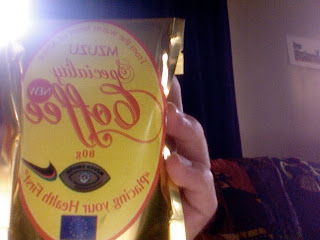
Regular coffee costs about $5.45/pound or MK1800 per kilogram. One of the small but pleasant surprises about being here is that the coffee is much better than previously reported to me. A number of different brands of coffee grown in Malawi can be purchased. I have become a fan of the Mzuzu Specialty Coffee. (The cheapest place to buy it is at the Cross-Roads BP station. It is about MK300 less than anywhere else.)
Coffee consumption-I have never kept track of my coffee consumption before, but thought it would be interesting. From 21/11/10-11/12/10(4:09 pm as I am writing) I have drunk 122 cups of either brewed or instant coffee! (51 one instant cups and 71 cups of brewed coffee). 5.8 cups/day the avg. The least drunk in one day was 3 and the most was 11 (2 times) followed by 10 and 9!
Cheddar cheese costs about $6/lb, mozzarella is about the same.
By contrast, produce:
-potatoes MK100 per "bundle" (about 10 sm.-med.) (if you're a regular customer and you buy more
than one bundle, often they will throw in more out of a large pile)
-lettuce MK 50 per small head
-onions MK 50-100 per bundle (three large or about 6 small)
-green peppers MK 50-100
-green beans MK 50 per bundle (very fresh and good)
-carrots MK 50-100 per bundle (depending on their size)
-bananas MK 150-200 per bunch
-enormous mushrooms (saw these for the first time this week) MK 500 for 3-4
- strawberries MK250-350 per cardboard tray
-fresh garlic MK 100 for a small bag
-but apples are MK50-70 per apple (they're imported from South Africa)
Milk fresh milk(which is dispensed from a stainless steel drum or a (clean, we hope) garbage can depending on when you get there) is MK130/litre. UHT milk in the box with a long shelf life is 300/litre. (I will let you work on your conversion skills with this one.)
Bread (always fresh) MK115 per loaf
Ground beef or "mince" is about $8/lb.
Boneless skinless Chicken breasts are about $1.50/lb
Cornflakes costs about $3.3/lb or MK1200/kg.
Petrol/gas is $5.86/gal. or MK256/litre
Clear packing tape is $8 per roll!!!!
Fuel Economy The Carlisles are the proud owners of a 1997 Toyota Ipsum. This is a cross between a station wagon and a mini-van. 18.7mpg or 80kpl.
Front page news is when the Malawian Government is accused of steeling MK 6 million or about $36,000 from one of the political parties! There is not much going on here!
More front page news there is a shortage of subsidized fertitliser which is very important to the average Malawian. However, the Minister of Agriculture assures the people that according to his records 95% of all the subsidized fertiliser has been distributed. Therefore, it is impossible for there to be a shortage!
Commuting times on the way to work it takes me about 4 minutes and the return trip is 6 minutes (it's only up-hill one way)
Malawian currency's largest bank note is the MK500. This is rather inconvenient since a shopping trip usually requires taking MK30,000. (This translates into three little rubber-banded stacks of 20 bills each). You always feel like you're carrying too much money.
Conversion rates for USD to MK: At the ForEx with cash MK175-180 (depending on the amount) per $1; ATM/Bank transfer 150 per dollar; transfer from support account in states to academy to a check 165 per dollar.


(For reference 1000 Malawi kwatcha (MK) is roughly equivalent to $6.oo). Badly inflated currency is a little inconvenient to use.
Instant coffee costs about $7 per half pound or MK1200 per 200 grams (Africafe is the preferred instant brand. It is still instant, but noticeably better than Nescafe).
Regular coffee costs about $5.45/pound or MK1800 per kilogram. One of the small but pleasant surprises about being here is that the coffee is much better than previously reported to me. A number of different brands of coffee grown in Malawi can be purchased. I have become a fan of the Mzuzu Specialty Coffee. (The cheapest place to buy it is at the Cross-Roads BP station. It is about MK300 less than anywhere else.)
Coffee consumption-I have never kept track of my coffee consumption before, but thought it would be interesting. From 21/11/10-11/12/10(4:09 pm as I am writing) I have drunk 122 cups of either brewed or instant coffee! (51 one instant cups and 71 cups of brewed coffee). 5.8 cups/day the avg. The least drunk in one day was 3 and the most was 11 (2 times) followed by 10 and 9!
Cheddar cheese costs about $6/lb, mozzarella is about the same.
By contrast, produce:
-potatoes MK100 per "bundle" (about 10 sm.-med.) (if you're a regular customer and you buy more
than one bundle, often they will throw in more out of a large pile)
-lettuce MK 50 per small head
-onions MK 50-100 per bundle (three large or about 6 small)
-green peppers MK 50-100
-green beans MK 50 per bundle (very fresh and good)
-carrots MK 50-100 per bundle (depending on their size)
-bananas MK 150-200 per bunch
-enormous mushrooms (saw these for the first time this week) MK 500 for 3-4
- strawberries MK250-350 per cardboard tray
-fresh garlic MK 100 for a small bag
-but apples are MK50-70 per apple (they're imported from South Africa)
Milk fresh milk(which is dispensed from a stainless steel drum or a (clean, we hope) garbage can depending on when you get there) is MK130/litre. UHT milk in the box with a long shelf life is 300/litre. (I will let you work on your conversion skills with this one.)
Bread (always fresh) MK115 per loaf
Ground beef or "mince" is about $8/lb.
Boneless skinless Chicken breasts are about $1.50/lb
Cornflakes costs about $3.3/lb or MK1200/kg.
Petrol/gas is $5.86/gal. or MK256/litre
Clear packing tape is $8 per roll!!!!
Fuel Economy The Carlisles are the proud owners of a 1997 Toyota Ipsum. This is a cross between a station wagon and a mini-van. 18.7mpg or 80kpl.
Front page news is when the Malawian Government is accused of steeling MK 6 million or about $36,000 from one of the political parties! There is not much going on here!
More front page news there is a shortage of subsidized fertitliser which is very important to the average Malawian. However, the Minister of Agriculture assures the people that according to his records 95% of all the subsidized fertiliser has been distributed. Therefore, it is impossible for there to be a shortage!
Commuting times on the way to work it takes me about 4 minutes and the return trip is 6 minutes (it's only up-hill one way)
Malawian currency's largest bank note is the MK500. This is rather inconvenient since a shopping trip usually requires taking MK30,000. (This translates into three little rubber-banded stacks of 20 bills each). You always feel like you're carrying too much money.
Conversion rates for USD to MK: At the ForEx with cash MK175-180 (depending on the amount) per $1; ATM/Bank transfer 150 per dollar; transfer from support account in states to academy to a check 165 per dollar.


Subscribe to:
Posts (Atom)